
When clients come to therapy, we often work on addressing negative thought patterns. We work on noticing negative thought patterns and changing them. We do this by using cognitive reframing or challenging. For example, a thought could be, “I am going to fail my test tomorrow,” we may look at re-framing it to something like, “I may fail, but I also may pass due to the efforts I have spent studying.” This helps the client see things more fairly and honestly while changing their emotions and behaviors to be more helpful. What happens, though, when having optimistic thoughts, not negative ones, is the problem that needs to be addressed?
In an article titled, Incautiously Optimistic: Positively-Valenced Cognitive Avoidance in Adult ADHD (Knouse et al., 2015), the authors discuss how some individuals with ADHD can think optimistically about issues, leading them not to change behaviors and experience negative consequences. Think about the example from earlier where the client’s thoughts that need to be addressed are, instead, “I will pass the test, so I don’t need to study. I usually do fine.” Then, due to not studying, the client may actually fail the test. This thought pattern seems good on the surface, but it can actually be a way someone avoids coping with consequences and leads to avoidance. Avoidance is a common way for people to cope with emotional discomfort from their thoughts or behaviors.
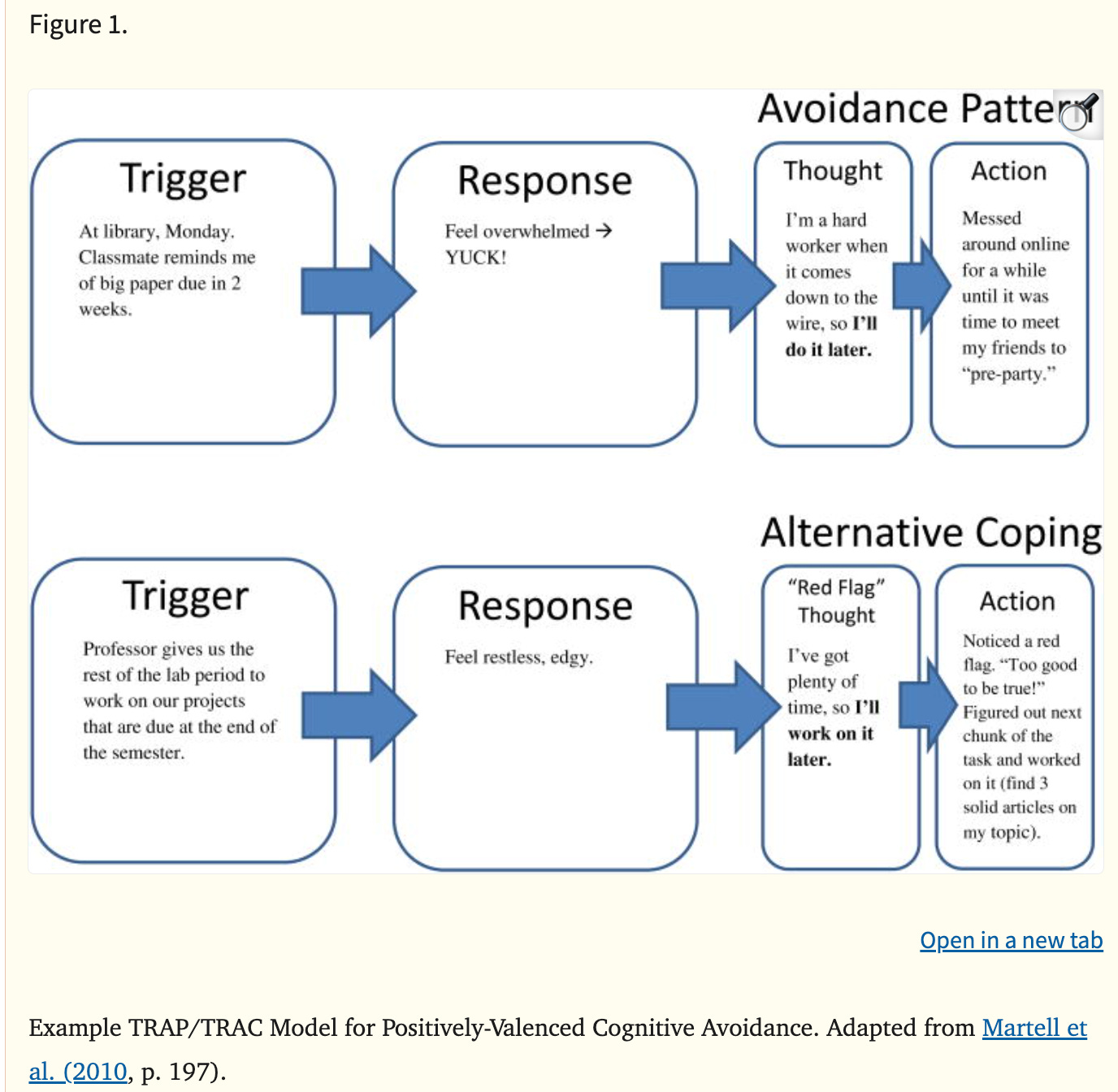
For these optimistic thoughts common in people with ADHD, the best approach is to start noticing when we are having “incautiously optimistic thoughts” and challenge them. I joke with clients and encourage them to think about having a little devil on their shoulder with a needle popping the incautiously optimistic thought bubbles. Going from things like, “I don’t need to study because I usually do well,” to (POP!). → “Just kidding, I am being too optimistic. What can I do to ensure I will not fail the test?” Below is a graphic from the Knouse et al. article to help illustrate this thought pattern and changes to help:
Also, related to this topic, in my therapy sessions with my clients with ADHD, we often discuss what I call “Time Optimism” or what Russell A. Barkley ( a well-known psychologist and researcher) and others in psychology refer to as “time blindness.” This is a common observed experience with ADHDers that may be late for appointments, struggle with task switching, and or underestimate how long something will take to complete. For example, a parent with ADHD may be responsible for picking up their child from school at a certain time. However, ten minutes before they needed to leave to be on time, they decided to start folding the laundry. They complete their chore of folding laundry… but now their child has been waiting for them to pick them up, and the school is calling the parent due to concern.
The parent had good intentions and was most likely having an optimistic thought like, “I’ll just quickly do this and get my kid. I still have 10 minutes,” or, “My kid will be fine, it’s just a few minutes late.” This can turn into “I don’t need to worry about leaving on time because things just work out and I am a good parent.” These thoughts help the parent avoid negative emotions related to being late, upsetting their child, and concerning other adults. This could lead the parent not to change their maladaptive behavior.
In conclusion, being optimistic is not always the most helpful thing when dealing with ADHD and related issues like time blindness, etc. Taking accountability, recognizing when our brains are being “incautiously optimistic”, and working through uncomfortable emotions is actually the best way we can live happier and healthier lives. If you would like to learn more and get help managing ADHD, anxiety, or related issues, feel free to reach out and schedule a free 15-minute consultation.
References:
Knouse, L. E., Zvorsky, I., & Safren, S. A. (2015). Incautiously optimistic: Positively valenced cognitive avoidance in adult ADHD. Cognitive and Behavioral Practice, 22(4), 450–463. https://doi.org/10.1016/j.cbpra.2014.07.002