It often feels like a new filter by which we view the world. Things we realize are not always blue or rose colored. You didn’t take a pill (or a different one); you didn’t have surgery; you just sat in a room and talked to a therapist week after week. Something did happen. It just wasn’t so obvious in the moment.
From a young age, we learn and begin to experience life. We tell ourselves narratives around our experiences about what we are experiencing and often look for evidence to support our emotional state. These experiences become patterns in our circuits of neurons that strengthen when they fire together and weaken when they don’t.
Mental health therapy, when it works, is a structured way of changing which circuits fire, how often, and in what order. It is literally a way of editing the brain with words and relationships.

The cast of characters
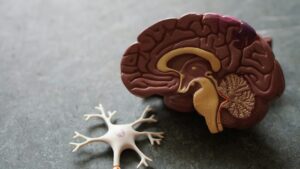
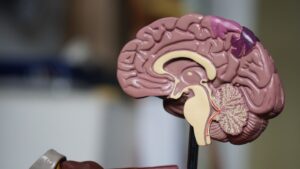
No single brain region “holds” anxiety or depression. What matters is how regions talk to each other. Four players show up again and again in the research.
The amygdala: the smoke detector. Deep in each temporal lobe sits a small cluster of nuclei tuned to one question: is this dangerous? It’s fast and not very precise. It learns associations quickly (that voice, that hallway, that feeling in your chest) and it would rather raise a hundred false alarms than miss one real threat. In anxiety, PTSD, and depression, it tends to be more reactive than it needs to be.

The prefrontal cortex: the context-giver. Behind your forehead, especially in the ventromedial and dorsolateral regions, the prefrontal cortex does slower, more deliberate work. It holds goals in mind, weighs alternatives, and, crucially, sends signals down to the amygdala that can say, in effect, I see the alarm, but we’re actually safe here. Much of emotional regulation is this top-down conversation (Delgado et al., 2008).
The hippocampus: the librarian of context. The hippocampus encodes where and when things happened. It’s what lets you know that a loud bang at a fireworks show is different from a loud bang in a war zone. Chronic stress can impair it, which is one reason trauma memories can feel unanchored in time, as if they’re happening now rather than then (McEwen, 1999).

The default mode network: the narrator. When you’re not focused on a task, a set of regions along the brain’s midline lights up together. This network is involved in self-reflection, memory, and imagining the future. It’s also where rumination lives. In depression, it can get stuck in a loop, replaying the same self-critical story with nothing to interrupt it (Hamilton et al., 2015).

Most of what we call psychological suffering involves these circuits being out of balance: an alarm that fires too easily, a regulator that can’t get a word in, context that gets lost, and a narrator stuck on repeat.
How therapy gets its hands on the wiring
Different therapies sound very different in the room, but at the level of circuitry they seem to lean on a handful of shared mechanisms.
1. Extinction: teaching the alarm something new. Exposure-based therapies, the backbone of treatment for phobias, OCD, and PTSD, work by putting you in contact with what you fear, safely and repeatedly, until the alarm learns it was wrong. Here’s the surprising part: the original fear memory isn’t erased. Instead, the brain lays down a new memory, “this is safe now,” stored largely in prefrontal circuits that inhibit the amygdala (Bouton, 2002). That’s why fears can return under stress or in a new setting. Therapy doesn’t delete the old path; it builds a stronger detour (Phelps et al., 2004).
2. Reappraisal: strengthening the top-down voice. Cognitive therapies train you to catch an automatic thought and look at it from another angle. Each time you do this, you’re exercising the pathway from the prefrontal cortex to the amygdala (Delgado et al., 2008). Like any skill, it starts effortful and gets more automatic with practice. Over time, the reframe can kick in before the full emotional storm does (Goldin et al., 2013).
3. Reconsolidation: rewriting memories while they’re open. One of the more striking findings in memory science is that recalling a memory can temporarily make it unstable, open to being updated before it’s stored again. If, while a painful memory is active, you experience something that contradicts it (comfort where there was once abandonment, mastery where there was helplessness), the memory may be re-saved with a different emotional charge (Schiller et al., 2010). Many therapists think this is part of what happens when old wounds are revisited inside a safe relationship, though the human evidence is still developing.
4. Interrupting the narrator. Mindfulness-based approaches and behavioral activation target rumination directly, pulling attention out of the self-referential loop and into the present or into action (Brewer et al., 2011). Studies of meditation and mindfulness training suggest changes in how the default mode network couples with attention and control networks.
5. The relationship itself. It’s easy to skip this one because it sounds soft. It isn’t. Humans are built to regulate their nervous systems through other people. A consistent, attuned therapist offers a kind of external regulation, a calm nervous system to borrow, that over time can be internalized. The quality of the therapeutic alliance is one of the most reliable predictors of outcome across almost every type of therapy, which suggests it’s doing real neurobiological work(Flückiger et al., 2018).
Why this matters if you’re the one in the chair
Knowing the neuroscience won’t do your therapy for you. But it can change how you relate to the process.
It explains why change is slow. You’re not just learning an idea; you’re building new pathways and letting old ones weaken through disuse. That takes repetition, the same way learning an instrument does. The session is the lesson. The week between sessions is the practice.
It explains why old reactions come back. A relapse of an old fear under stress isn’t proof that nothing changed. The old circuit is still there; the new one just hasn’t become the default yet. That’s information, not failure.
And it reframes what you’re doing when you sit down and talk. You aren’t just venting, or being analyzed, or getting advice. You’re running a slow, careful experiment on your own nervous system, with someone beside you who helps keep the conditions safe enough for the old patterns to be updated.
That moment I described at the start, the beat of space before the old reaction, is what new wiring feels like from the inside. It’s quiet. It’s easy to miss. But it might be the most important thing your brain has learned in years.

References
- Baxter, L. R., Schwartz, J. M., Bergman, K. S., et al. (1992). Caudate glucose metabolic rate changes with both drug and behavior therapy for obsessive-compulsive disorder. Archives of General Psychiatry, 49, 681–689.
- Bouton, M. E. (2002). Context, ambiguity, and unlearning: Sources of relapse after behavioral extinction. Biological Psychiatry, 52, 976–986.
- Brewer, J. A., Worhunsky, P. D., Gray, J. R., et al. (2011). Meditation experience is associated with differences in default mode network activity and connectivity. PNAS, 108(50), 20254–20259.
- Button, K. S., Ioannidis, J. P. A., Mokrysz, C., et al. (2013). Power failure: Why small sample size undermines the reliability of neuroscience. Nature Reviews Neuroscience, 14, 365–376.
- Chalkia, A., Schroyens, N., Leng, L., et al. (2020). No persistent attenuation of fear memories in humans: A registered replication of the reactivation-extinction effect. Cortex, 129, 496–509.
- Delgado, M. R., Nearing, K. I., LeDoux, J. E., & Phelps, E. A. (2008). Neural circuitry underlying the regulation of conditioned fear and its relation to extinction. Neuron, 59, 829–838.
- Felmingham, K., Kemp, A., Williams, L., et al. (2007). Changes in anterior cingulate and amygdala after cognitive behavior therapy of posttraumatic stress disorder. Psychological Science, 18(2), 127–129.
- Flückiger, C., Del Re, A. C., Wampold, B. E., & Horvath, A. O. (2018). The alliance in adult psychotherapy: A meta-analytic synthesis. Psychotherapy, 55(4), 316–340.
- Furmark, T., Tillfors, M., Marteinsdottir, I., et al. (2002). Common changes in cerebral blood flow in patients with social phobia treated with citalopram or cognitive-behavioral therapy. Archives of General Psychiatry, 59, 425–433.
- Goldapple, K., Segal, Z., Garson, C., et al. (2004). Modulation of cortical-limbic pathways in major depression: Treatment-specific effects of cognitive behavior therapy. Archives of General Psychiatry, 61(1), 34–41.
- Goldin, P. R., Ziv, M., Jazaieri, H., et al. (2013). Impact of cognitive behavioral therapy for social anxiety disorder on the neural dynamics of cognitive reappraisal of negative self-beliefs. JAMA Psychiatry, 70(10), 1048–1056.
- Hamilton, J. P., Farmer, M., Fogelman, P., & Gotlib, I. H. (2015). Depressive rumination, the default-mode network, and the dark matter of clinical neuroscience. Biological Psychiatry, 78(4), 224–230.
- McEwen, B. S. (1999). Stress and hippocampal plasticity. Annual Review of Neuroscience, 22, 105–122.
- Phelps, E. A., Delgado, M. R., Nearing, K. I., & LeDoux, J. E. (2004). Extinction learning in humans: Role of the amygdala and vmPFC. Neuron, 43, 897–905.
- Schiller, D., Monfils, M.-H., Raio, C. M., et al. (2010). Preventing the return of fear in humans using reconsolidation update mechanisms. Nature, 463, 49–53.
- van der Straten, A. L., Denys, D., & van Wingen, G. A. (2017). Impact of treatment on resting cerebral blood flow and metabolism in obsessive compulsive disorder: A meta-analysis. Scientific Reports, 7, 17464.
If you’re struggling right now, a licensed therapist or your doctor is a good first step. Nothing here is a substitute for care.