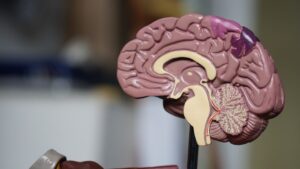
Attention Deficit Hyperactive Disorder (ADHD) is a neurodevelopmental disorder. This means ADHD impacts the brain structure and function in areas related to executive function, attention, and impulse control. These are the specific things that are impacted:
- The prefrontal cortex — the region governing planning, focus, and impulse control — tends to develop more slowly and shows different activity patterns in people with ADHD.
- Dopamine and norepinephrine systems — these neurotransmitter pathways, which regulate attention and motivation, function differently in ADHD brains.
- Brain connectivity — studies show differences in how certain brain networks communicate with each other.
It is considered a neurodevelopmental disorder due to differences emerging during brain development (mostly in childhood) instead of from injury or a degenerative process. Issues related to ADHD are not due to a lack of willpower or character flaws. It is an internal challenge from neurological differences. This is why best practices to help these individuals function at their best are behavioral modifications, environmental accommodations, and medications, such as stimulants (and some non-stimulants) that can boost dopamine levels. The condition is highly heritable (genetics play a strong role) and affects roughly 5–10% of children and 2–5% of adults worldwide.
Knowing this about people who have ADHD is important for traditional talk therapy to accommodate and be the most helpful.
Here are some recommendations for therapists to do, and clients to consider requesting from their therapists when being treated for ADHD or other co-occurring issues. Remember that ADHD is always operating in the background despite it not always being the main concern being addressed in session.
Structure & Session Format
- Shorter, more frequent check-ins can work better than long weekly sessions, since sustaining focus and retaining insights over time is harder.
- Agendas and visual aids help keep track of sessions. At times, wandering conversations can feel satisfying but leave little to act on.
- Ending with a clear, concrete takeaway matters more than it does with neurotypical clients, because working memory issues mean insights evaporate quickly.
Therapeutic Approach
Standard talk therapy (especially unstructured psychodynamic styles) is often a poor fit. Better-matched approaches include:
- CBT adapted for ADHD — with more coaching, repetition, and external scaffolding rather than relying on insight alone.
- DBT — particularly useful for emotional dysregulation, which is underdiagnosed but central to ADHD.
- ACT (Acceptance & Commitment Therapy) — helpful for the shame and self-criticism that accumulates from years of “failing” at things that felt easy for others.
- ADHD coaching integrated into therapy — practical skill-building (time management, breaking down tasks) alongside emotional work.
Addressing What’s Actually Going On
Good ADHD therapy addresses the whole picture, not just productivity:
- Shame and internalized failure narratives — most ADHDers carry years of being told they’re lazy, careless, or not trying hard enough. This is often the deepest wound.
- Rejection Sensitive Dysphoria (RSD) — intense emotional reactions to perceived rejection or criticism, which is extremely common and rarely discussed.
- Late diagnosis grief — for adults diagnosed late, there’s often real grief over lost years, relationships, or opportunities.
- Masking and burnout — especially in women and people diagnosed late, the exhaustion of compensating and appearing “fine.”
Therapist Adjustments
The therapist themselves needs to adapt:
- Don’t pathologize ADHD traits — interrupting, tangential thinking, or fidgeting aren’t rudeness or resistance; they’re neurology.
- Be more direct and active than with neurotypical clients — waiting for the client to self-generate structure often doesn’t work.
- Follow up on homework gently and without shame — if a client didn’t do the between-session task, that is ADHD, not non-compliance.
- Flexibility with format — walking sessions, allowing fidget tools, or adjusting session length can make a real difference.
Neurodiversity-Affirming vs. Deficit-Focused
The most important distinction is philosophical. Therapy should help ADHDers build a life that works with their brain, not try to make them approximate a neurotypical standard. Reframing ADHD traits (hyper-focus, creativity, novelty-seeking, thinking outside systems) as genuine strengths — while honestly addressing what’s genuinely hard — leads to much better outcomes than a pure deficit-reduction model. Remembering that oftentimes societal structures are the issues for ADHDers…therapists are here to help ADHDers/ all clients adjust and improve their functioning within the system we are all forced to live in.